Skip to content
Botox is one of the most researched and widely used aesthetic treatments in the world, yet many people still feel unsure about what it actually does beneath the surface. If you have noticed fine lines forming when you smile or frown, or if your face looks tired even when you feel rested, it is natural to want answers before committing to treatment.
At AmericAesthetics, clients often ask how Botox works on muscle movement and why it can soften wrinkles without changing who they are. Understanding the science behind Botox helps replace uncertainty with clarity and allows you to make decisions based on facts rather than hype.
Understanding Facial Muscles and Expression Lines
To understand the mechanism of action of Botox, it helps to start with facial anatomy. Your face contains dozens of small muscles that contract when you smile, squint, frown, or raise your eyebrows. These repeated movements are essential for expression, but over time, they create dynamic wrinkles.
Dynamic wrinkles are lines that appear during movement. Common examples include:
- Forehead lines from raising the eyebrows
- Crow’s feet from squinting or smiling
- Frown lines between the brows
As skin naturally loses collagen and elasticity with age, these movement-based lines can become visible even at rest. Botox treatment science focuses on reducing the intensity of muscle contractions that cause these lines, rather than altering the skin itself.
How Botox Works on Muscle Movement?
Botox works on muscle movement comes down to communication between nerves and muscles. Usually, when you want to move a facial muscle, your nerve endings release a chemical messenger called acetylcholine. This signal tells the muscle to contract.
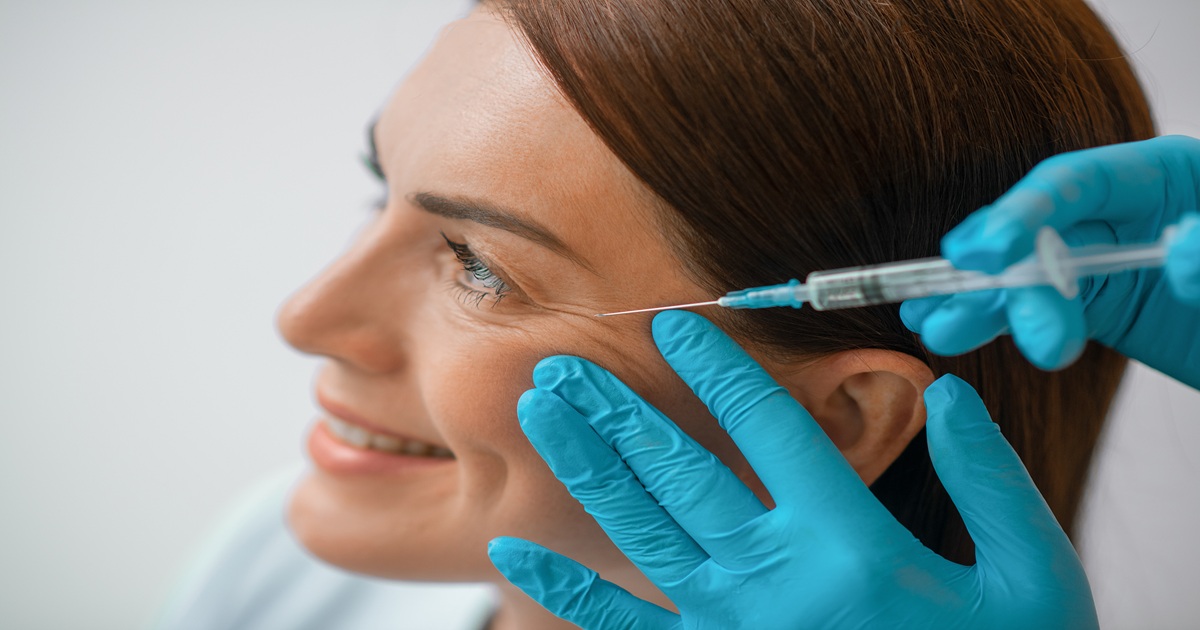
Botox temporarily blocks this signal. When injected into specific muscles, it reduces acetylcholine release at the neuromuscular junction. Without that signal, the muscle cannot contract with the same strength.
Important points to understand:
- Botox does not freeze the face entirely
- It relaxes targeted muscles only
- Surrounding muscles continue to function normally
This controlled relaxation softens wrinkles while allowing natural expression when the treatment is performed correctly.
Botox Mechanism of Action Explained Simply
The mechanism of action of Botox is precise and localized. It does not travel throughout the body or affect unrelated muscles. The product stays near the injection site and works only where placed.
Here is a simplified breakdown:
- Botox is injected into a specific facial muscle
- Nerve signals to that muscle are reduced
- The muscle relaxes instead of fully contracting
- The overlying skin appears smoother during expression
Because Botox affects muscle activity rather than skin structure, it is considered a neuromodulator. This is why Botox and similar products are often grouped under neuromodulator treatments.
How Botox Relaxes Facial Muscles Without Changing Your Look
One common concern is losing facial expression. In reality, Botox’s effects on facial expressions depend heavily on technique, dosage, and placement.
When administered thoughtfully:
- Strong muscle contractions are softened, not eliminated
- Subtle movements remain intact
- The face looks more rested, not stiff
The goal of modern Botox treatment science is balance. By reducing overactive muscles while preserving natural movement, Botox can support a refreshed appearance rather than an altered one.
Botox for Wrinkles and Fine Lines
Botox for wrinkles and fine lines is most effective on dynamic lines caused by repetitive motion. These include:
- Forehead creases
- Crow’s feet
- Glabellar lines between the brows
Static wrinkles, which are visible even when the face is at rest, may still improve with Botox, mainly if they are partly caused by muscle activity. However, deeper lines may benefit from a combined approach that includes other treatments.
At AmericAesthetics, Botox is often part of a broader facial rejuvenation plan that considers skin quality, muscle strength, and facial symmetry.
What Happens After a Botox Treatment
Understanding what happens after treatment is another key to understanding how Botox affects muscle movement.
First few days: Botox begins binding at the neuromuscular junction, but visible changes are usually subtle.
Days 5 to 7: Muscle relaxation becomes more noticeable. Expressions feel softer, and lines may appear less defined.
Two weeks: Full results are typically visible. This is when providers assess symmetry and make adjustments if needed.
Results gradually fade over three to four months as nerve signals regenerate. This temporary effect is part of what makes Botox a flexible and adjustable option.
Botox®, Xeomin®, and Other Neuromodulators
Botox® and Xeomin® are both commonly used neuromodulators. While they work similarly by affecting muscle movement, there are slight differences in formulation.
Botox® contains accessory proteins, while Xeomin® is a more purified form. Both products aim to achieve the same outcome: reducing muscle contraction to soften expression lines.
A skilled provider helps determine which option aligns best with your facial anatomy and treatment goals. The science behind both remains focused on precise muscle relaxation rather than volume replacement.
Who Is a Good Candidate for Botox Treatments
Botox is suitable for a wide range of adults who want to address expression-related lines without surgery. People who often benefit include:
- Those noticing early forehead or eye-area lines
- Individuals bothered by a tense or tired appearance
- Clients seeking preventative care before lines deepen
Botox is also used preventively to relax muscles before wrinkles form. This approach relies on understanding muscle movement patterns rather than chasing visible lines alone.
Safety, Precision, and Professional Expertise
The science of Botox depends heavily on anatomical knowledge and technique. Correct placement ensures that only the intended muscles are affected. Incorrect placement can lead to uneven results or temporary weakness in unintended areas.
This is why professional training and experience matter. At AmericAesthetics, neuromodulator treatments are approached with careful evaluation, conservative dosing, and attention to natural movement.
Botox has a long safety record when administered appropriately, and complications are rare when protocols are followed.
Feel Confident As You Explore Botox
If you are considering Botox® or Xeomin® in Brooklyn, NY, learning the science is an important first step. A personalized consultation allows your provider to assess muscle movement, facial balance, and goals before recommending treatment.
At AmericAesthetics, neuromodulator treatments are guided by anatomy, experience, and a respect for natural expression.
A science-based approach can help you feel informed, comfortable, and confident as you explore Botox treatments to achieve a refreshed, natural-looking appearance.